Battery preheating by brand
A warm battery takes more power on a fast charger, and in most cars heating is started by navigation to the charger.
Translated from Serbian. Where the exact wording matters, the Serbian original applies.
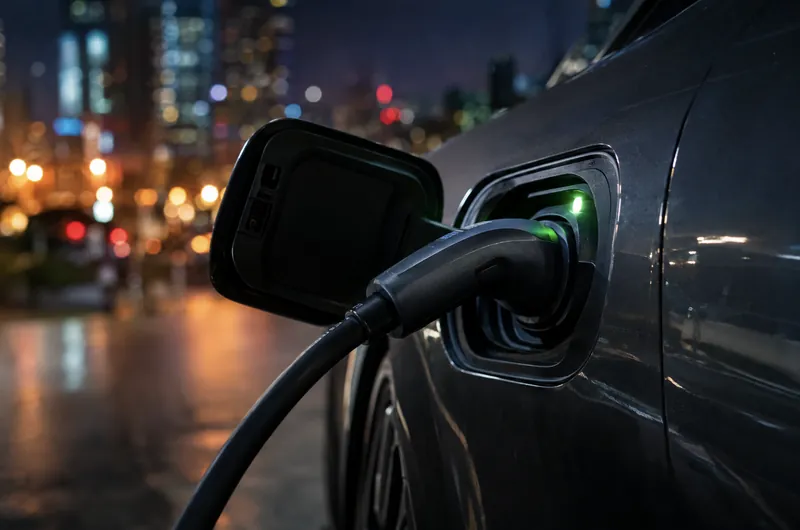
- On a fast charger the battery takes the most power at about 20–40 °C
- In most cars heating starts only when a fast charger is the destination in the car's navigation
- Tesla advises starting navigation to the charger 30–45 minutes before arrival
- VW ID, Škoda Enyaq and Cupra Born built from 2021 to early 2024 cannot preheat before charging
- Charge&GO and Orion bill per minute: a cold battery takes fewer kW, so the kWh costs more
How to switch it on, by brand
| Make | Automatic | Manual |
|---|---|---|
| Tesla | fast charger as the navigation destination | before setting off, if the charger is close |
| VW, Škoda (newer software) | fast charger as the navigation destination | button on the screen |
| Hyundai, Kia | mode switched on + DC charger as the destination | Kia EV3, EV6, EV9: screen or app |
| Renault Megane E-Tech | route entered in Google Maps in the car | Not mentioned |
For other brands, check the owner's manual for your model, the charging chapter.
Details: navigation on the phone
In most cars heating is started only by the car's own navigation. For drivers who use Google Maps or Waze via CarPlay or Android Auto, Škoda offers manual activation. If your car has no manual option, set the fast charger in the car's own navigation.
Tesla, VW and Škoda
Tesla: set a fast charger as the navigation destination. According to the manual, this works for Superchargers and for fast chargers of other networks. Navigation should run at least 30–45 minutes before arrival. If the drive is shorter, the manual advises switching preconditioning on before setting off. Where the Superchargers are: Tesla in Serbia.
VW: with route guidance active, preconditioning switches on by itself on the way to the next fast charger. On the ID.3 Pro S it can also be switched on manually, in the charging menu.
Škoda: on the Enyaq and Elroq heating switches on when a fast charger is the navigation destination. Manually, it is switched on with a button on the screen.
Details: older VW ID, Enyaq and Born
- MEB models built from 2021 to early 2024 cannot heat the battery before fast charging. They include the VW ID.3, ID.4 and ID. Buzz, Škoda Enyaq and Cupra Born.
- Cars with the latest software can heat the battery with a tap on the screen.
- Škoda introduced preconditioning with the 2024 Enyaq: a button on the screen or navigation to a fast charger.
- With a warm battery the ID.3 Pro S charges at up to 175 kW. According to VW, charging is several minutes shorter, especially in winter.
- For older models there are third-party add-ons that connect to the battery system. This is not a factory feature and will probably void the warranty.
Hyundai and Kia
The mode is switched on once. On the screen go to [EV] > [EV settings] > [Battery conditioning mode] and tick it. Then set a DC fast charger as the navigation destination. While the battery heats up, a red coil lights up on the battery gauge.
The Kia EV3, EV6 and EV9 can also start preconditioning manually, on the screen or in the Kia Connect app. According to Kia, on the EV6 preconditioning cuts fast-charging time by up to 50 %.
Details: conditions and older cars
- Heating uses energy from the battery and can reduce range. When the car is plugged in, the power comes from the grid.
- Only models with a battery heater have this mode.
- IONIQ 5: heating starts when the battery is colder than 20 °C, after 1–2 minutes of system checks. The figure comes from a service bulletin of Hyundai in the US.
- The 2022 Kia EV6 gets the feature with a software update at an authorised service. Conditions and charging times for the EV6: why a car charges slowly on a fast charger.
Renault
Megane E-Tech: enter the route in Google Maps in the car's system. Preconditioning then switches on by itself, so the battery arrives at the charger warm. In the UK, the car's Google system comes with the techno+ trim and above.
The new Megane E-Tech, launched in September 2026, has battery preconditioning as standard.
Why it pays off on chargers in Serbia
Charge&GO and Orion bill time, not kilowatt-hours. A cold battery takes less power, so you pay more minutes for the same kWh.
Example: Charge&GO DC 150–180 kW, 114,17 RSD/min.
| Car draws | Price per kWh |
|---|---|
| 100 kW | 68,5 RSD |
| 50 kW | 137 RSD |
Preconditioning makes sense in winter, when the battery is cold. Arrive with some charge in reserve, because heating uses energy from the battery. How to choose a charger and when to stop charging: how to pay less at a public charger.
Details: how the kWh price is calculated
kWh price = price per minute × 60 ÷ power the car takes. The per-minute price is from the Charge&GO app (October 2026). How much longer charging takes with a cold battery, in the ADAC test at −7 °C: why a car charges slowly on a fast charger. What else cuts range in winter: EV range in winter.
Sources (13)
- ADAC — fast-charging tips: 20–40 °C, preconditioning with route guidance to a fast charger
- Tesla — Model Y owner's manual, charging: navigation to fast chargers, including other networks
- Tesla — Model Y owner's manual, cold weather: Trip Planner, 30–45 minutes before arrival
- Volkswagen Newsroom — ID.3 Pro S: automatic with navigation, manual in the charging menu, up to 175 kW
- InsideEVs — MEB models from 2021 to early 2024 without preconditioning
- Electrifying — Škoda Enyaq 2024: button or navigation
- Electrifying — Škoda Enyaq and Elroq: automatic with navigation, manual with CarPlay and Android Auto
- Kia — Battery conditioning mode, menu and conditions
- Kia UK — manual preconditioning (EV3, EV6, EV9), grid power when plugged in
- electrive, 22.10.2022 — Kia EV6: up to 50 % shorter, below 21 °C, at least 24 %
- Hyundai Motor America, TSB 22-01-094H — IONIQ 5 Battery Conditioning
- Renault UK — Megane E-Tech, route planner and preconditioning
- Notebookcheck, 25.09.2026 — new Megane E-Tech, preconditioning as standard
Updated 29.10.2026 · next check 28.11.2026 · Report an error
Related
First charge at a public charger
You need an app or a payment card, the right connector and the right order: with Charge&GO confirm first, with Orion…
Which plug your car has
The socket under the flap decides which public chargers your car can use and whether you need an adapter.
Why a car charges slowly at a fast charger
The charger shows its maximum power; how much you actually get depends on the battery, the car and the second connector.